Quick answer: A marketing strategist turns business goals into a prioritized marketing plan. They define the audience, positioning, channel mix, budget, campaign sequence, and measurement model. Hire one when your team is active but priorities are unclear, channels are disconnected, or marketing cannot explain its contribution to pipeline.
Marketing looks creative from the outside. Then you start running campaigns and realize the creative part is maybe 20% of the job. The other 80%? Figuring out what to say, to whom, when, and why.
You need a marketing strategist exactly for that. To connect your business goals with marketing activities.
A digital marketing strategist will translate “we need to grow revenue by 30%” into “here’s how we’ll allocate budget across three channels, sequence our messaging, and measure what’s working.”
At O-CMO, nearly 70% of our marketing engagements start with the same problem: teams produce content, ads, and campaigns without a clear link to pipeline or positioning. The strategist role closes that gap.
Read on to learn what a marketing strategist does, how the digital version of this role differs, and where it fits inside a modern marketing organization.
What is a marketing strategist?
A marketing strategist is a senior marketing professional who designs and orchestrates marketing plans to achieve specific business goals.
For example, a strategist might plan how to position a new SaaS product. Or outline how to relaunch a brand in a new region. Or turn a sales target into a marketing roadmap with clear initiatives, timelines, and performance indicators.
A strategist typically doesn’t execute campaigns themselves. Instead, they define what campaigns should exist, why, and how they connect to business outcomes.
Their day-to-day work centers on planning and problem-solving. They talk to stakeholders across the business: sales teams, product managers, leadership, creative teams, paid media specialists. From those conversations, they build a marketing strategy that aligns everyone around shared goals.
💡Keep in mind:
- In smaller companies (startups, early-stage SaaS):
this role often overlaps with a Fractional CMO. You might have one person handle both planning and team leadership (sometimes even execution when resources are tight.)
- In mid-size companies ($10M–$100M ARR):
The strategist becomes a planning hub. They sit under a marketing director or CMO and coordinate across specialists—content, paid media, SEO, design. They’re responsible for quarterly planning, campaign architecture, etc.
- In large organizations (enterprise, Fortune 500):
Strategists specialize. You’ll find digital strategists, brand strategists, content strategists, even channel-specific roles like SEO strategist or social strategist. These roles often report into a centralized strategy function under the CMO.
What Does a Marketing Strategist Do Day to Day?
On a typical day, a marketing strategist moves between planning, alignment, and analysis.
Some days are spent in workshops defining audience segments and messaging. Others revolve around reviewing creative work, writing briefs, or preparing quarterly plans.
Here’s what that looks like in practice their marketing responsibilities look like:
Planning and prioritizing campaigns
Strategists decide what gets built and when. If the business wants to enter a new market, launch a product, or improve conversion rates, the strategist maps out how marketing will support that goal. They prioritize initiatives based on impact, resources, and timeline.
Translating business goals into marketing plans
Leadership says “we need more pipeline.” The strategist figures out what that means: Which segments should we target? What channels will reach them? What messaging will resonate? What’s our budget allocation? What does success look like in 30, 60, 90 days?
This translation work is where strategy happens. Turning a revenue target into a campaign roadmap requires understanding your market, your product, your sales process, and your current marketing performance.
Collaborating across functions
Strategists spend significant time briefing and coordinating with execution teams. They work with:
- Designers on visual direction and creative concepts
- Content teams on messaging frameworks and editorial calendars
- Paid media specialists on audience targeting and budget allocation
- SEO teams on keyword strategy and content prioritization
- PR on narrative positioning and media outreach
If you’re working with an agency, the strategist is often the internal liaison translating business context into briefs the agency can execute against.
Monitoring results and refining plans
Once campaigns launch, strategists track performance against the plan. They review dashboards, analyze conversion data, and identify what’s working or stalling. Then they adjust: reallocate budget, test new messaging, pause underperforming channels.
💡Important: Marketing strategists love data and always require feedback loop. This is what allows them to stay clear on the roadmap to targets and plan the whole campaign with precision.
Presenting direction to leadership or clients
Strategists regularly present plans and results to executives, boards, or clients. They need to explain why certain initiatives matter, how marketing contributes to revenue, and what trade-offs exist when priorities shift.
Overall, a marketing digital strategist spends a lot of time solving problems. Case in point: the client needs more leads; sales says the leads are low-quality; product is launching a new feature. The strategist is the person who figures out how all of that fits together into a plan everyone can execute.
Marketing Strategist vs Digital Marketing Strategist
The terms overlap more than they differ.
A digital marketing strategist focuses specifically on online channels: paid search and social, organic content, email, websites, conversion optimization. Most modern marketing budgets flow through digital, so digital strategists are in high demand.
A marketing strategist (without the “digital” qualifier) may include offline channels—events, direct mail, partnerships, traditional media—and typically owns broader positioning and brand strategy work.
In practice, the distinction matters less than it used to. Digital channels dominate B2B and SaaS marketing, so even generalist strategists spend most of their time on digital planning. The “digital” prefix often signals channel focus rather than a fundamentally different role.
Some companies use “digital marketing strategist” to differentiate from brand strategists who work on positioning, voice, and visual identity. But many strategists do both.
Where Does the Role of a Marketing Strategist Sit Within the Organization?
The marketing strategist sits between leadership and execution — high enough to shape direction, close enough to the team to make it real.
Their specific place in the org chart will depend on company size and structure though.
Here’s how it fits inside a typical B2B or agency hierarchy:
Chief Revenue Officer (CRO)
Owns revenue growth across sales, marketing, and customer success. Reports to the CEO. Receives direct reports from the CMO, VP of Sales, and Head of Customer Success.
👉 Learn more about the CRO role
Chief Marketing Officer (CMO)
Owns the entire marketing function—brand, positioning, demand generation, and go-to-market strategy. Defines where the company plays, what story it tells, and how marketing supports business goals. Reports to the CRO or CEO (depending on structure). Receives reports from the Marketing Director or Head of Marketing.
👉 Read about the role of a Fractional CMO
Marketing Director / Head of Marketing
Turns the CMO’s high-level strategy into an actionable marketing plan. Manages departments: content, performance marketing, design, PR, sometimes product marketing. Reports to the CMO. Direct reports include the Marketing Strategist, Content Marketing Manager, and other channel leads.
👉 Learn more on marketing directors
Marketing Strategist
Sits under the Marketing Director or alongside other functional leads. Acts as the “thinking partner” for team leads—planning quarterly initiatives, defining audiences, sequencing campaigns, and aligning creative, paid, and content efforts. Works across teams rather than managing people directly. Reports to the Marketing Director or directly to the CMO in smaller teams.
Content Marketing Manager / Digital Marketing Manager / Channel Leads
Execute the plan of a marketing strategist. Own specific parts of marketing — blog, ads, SEO, social, email — and measure performance within those areas. Reports to: Marketing Director or Strategist
👉 Read more about fractional content marketing
In short:
The CRO defines revenue goals.
The CMO builds the marketing strategy to reach them.
The Marketing Director operationalizes it.
The Marketing Strategist connects the plan to execution.
And the specialists make it happen.
Digital Marketing Strategist vs Specialist
Strategists focus on what to do and why, while specialists handle how — running campaigns, managing tools, and optimizing performance.
Here’s how they differ in scope and impact:
| Aspect | Marketing Strategist | Marketing Specialist |
| Primary Focus | Designing and coordinating marketing plans that align with business goals. | Executing campaigns and tactics within a specific channel. |
| Scope | Broad — looks across channels, messaging, and metrics. | Narrow — focuses on one area like SEO, paid ads, email, or content. |
| Main Deliverables | Marketing strategy, campaign calendars, briefs, performance reviews. | Campaign assets, reports, optimizations, and channel improvements. |
| Decision Level | Strategic — decides what should be done and why. | Tactical — decides how to implement and when to adjust. |
| Metrics of Success | Alignment, efficiency, and contribution to business outcomes. | Channel-specific KPIs such as CTR, CPC, conversion rate, or engagement. |
| Collaboration | Works across all functions — sales, product, leadership, creative. | Collaborates with peers in their channel and follows strategic direction. |
| Career Progression | Specialist → Strategist → Senior Strategist → Director/CMO. | Coordinator → Specialist → Senior Specialist → Channel Lead/Manager. |
💡However, mid-sized and large organizations, marketing strategy divides into multiple focus areas. So you might have specialized marketing strategists.
Digital Marketing Strategist: Focuses on digital channels—paid search and social, organic content, email marketing, conversion rate optimization. This is the most common strategist role in B2B SaaS.
Content Strategist: Maps content to buyer journey stages. Defines what content gets created, for which audiences, and how it supports conversion goals.
Growth Strategist: Optimizes acquisition and retention funnels. Works closely with product and data teams to identify growth levers and run experiments.
Brand Strategist: Shapes positioning, messaging, and differentiation. Defines how the company shows up in the market and what makes it distinct from competitors.
Channel-Specific Strategists: In larger organizations, you’ll find SEO strategists, social media strategists, email strategists. These roles combine strategic planning with deep channel expertise.
The smaller the company, the more likely one strategist covers all these areas. The larger the company, the more specialization makes sense.
💡 Need a strategist before you hire one?
If your company hasn’t grown into a full-time strategist yet, borrow one from us.
At O-CMO, we design the strategy behind every channel launch: SEO, Clutch, social selling, PPC, etc.
Kick off your channel strategy with O-CMO
Digital Marketing Strategist Job Description
It’s a role that blends analytical thinking with strategic judgment. In your job description you should look for that:
Hard skills:
- Channel knowledge: Understanding how paid, organic, content, email, and events work—and how they connect
- Data analysis: Reading campaign performance, identifying trends, making decisions based on numbers
- Marketing technology: Working with CRMs, marketing automation, analytics platforms, project management tools
- Budget management: Allocating spend across channels and forecasting ROI
- Funnel mechanics: Knowing how leads move from awareness to conversion to retention
Soft skills
- Problem-solving: Diagnosing why marketing isn’t working and designing solutions
- Stakeholder management: Coordinating input from leadership, sales, product, and execution teams
- Communication: Translating complex marketing concepts into language non-marketers understand
- Project management: Keeping campaigns on track across multiple teams and timelines
- Strategic thinking: Connecting tactics to business outcomes, not just running activities
👉 Read also: 30+ CMO Interview Questions to Find Your Marketing Leader
Experience requirements
Most strategist roles require 5–8 years of marketing experience. You need enough time in execution to understand what actually works before you’re qualified to design the plan.
Junior strategists (sometimes called “marketing coordinators” or “campaign managers”) might start with 3–5 years of experience, focusing on execution support and learning to build campaign frameworks.
Senior strategists typically have 8+ years of experience and can operate independently—building strategies, presenting to executives, and leading strategic conversations with leadership.
Career path
Most marketing strategists come from one of three backgrounds:
- Specialists who expanded into planning: A content marketer or paid media manager who proved they could think beyond their channel and started coordinating broader campaigns.
- Agency account strategists: People who built marketing plans for multiple clients and learned to translate business goals into executable strategies.
- Product marketers: Professionals who understand positioning, messaging, and go-to-market—skills that transfer directly to marketing strategy.
Digital Marketing Strategist Salary
Compensation varies by experience level, company size, and whether the role is agency, in-house, or freelance.
United States salary snapshot for 2026:
| Role | Average base salary | Reported range |
| Digital marketing strategist | $76,030 | $49,238 to $117,401 |
| Senior digital marketing strategist | $85,209 | Varies by location and employer |
These are Indeed salary snapshots updated in July 2026, not universal bands. Company stage, location, specialization, and whether the role owns a team can move compensation materially. If the company needs function-level ownership rather than planning support, compare this role with a Fractional CMO.
Agency roles tend to pay slightly less than in-house but offer exposure to multiple clients and industries.
In-house roles at SaaS companies or tech firms often pay at the higher end of these ranges, especially in competitive markets like San Francisco, New York, or Boston.
Freelance digital marketing strategists typically charge $100–$250 per hour depending on experience and specialization. Many work on retainer (10–20 hours per week) or project-based engagements (strategy sprints, audits, roadmap development).
For companies exploring fractional cost options, a generalist CMO might fill the role of the marketing strategist at a rate of $4,000–$12,000 per month. This model works well for companies that need senior guidance without full-time headcount.
Remote work has expanded hiring options. Many strategists now work fully remote or hybrid, which opens opportunities in lower-cost markets while maintaining competitive salaries.
Why Companies Hire a Marketing Strategist
Marketing strategists get hired when execution is happening but outcomes aren’t improving.
Here are the most common triggers:
Marketing efforts feel fragmented
You’re running paid ads, publishing content, posting on social, sending emails—but nothing connects. Each channel operates independently. The strategist brings coherence, defining how channels support each other and build toward shared goals.
Creative work isn’t driving measurable results
Your content looks good, your ads are well-designed, but leads aren’t converting or pipeline isn’t growing. A strategist diagnoses where the disconnect happens and realigns messaging, targeting, or funnel architecture.
Channel specialists need direction
You’ve hired talented people to run SEO, paid media, and content. They’re executing well in their lanes, but no one’s orchestrating the bigger picture. The strategist sets priorities, sequences campaigns, and makes sure specialists aren’t duplicating effort or contradicting each other.
Leadership wants marketing tied to revenue
The board or executive team is asking “what’s marketing’s ROI?” and no one can answer clearly. A strategist builds the measurement framework, defines how marketing contributes to pipeline, and reports progress in business terms.
The company is scaling and marketing systems need to scale too
What worked at $5M ARR doesn’t work at $20M. You need repeatable processes, clearer roles, and a strategic framework that can handle growth. A strategist builds that foundation.
The CEO or founder is acting as the de facto strategist
Many founders start as the marketing brain. Eventually, that role consumes too much time. Hiring a strategist frees leadership to focus on product, sales, or fundraising while someone else owns the marketing plan.
Understanding when to bring in strategic marketing leadership often determines whether companies break through growth plateaus or stay stuck.
Common Misconceptions About Marketing Strategists
Many companies misunderstand what a strategist actually does or hire one expecting the wrong outcomes. Here are the most common myths that keep teams stuck.
Myth #1: Strategists only write documents and don’t get hands dirty
Strong strategists move between planning and implementation oversight. They’re not locked in a room creating slide decks. They join campaign reviews, troubleshoot underperforming channels, and guide specialists through execution. The best digital marketing strategists know when to jump into the work to keep momentum.
Myth #2: You need a strategist for every channel
Most B2B companies need one senior strategist who orchestrates specialists. Adding strategists for SEO, paid, content, and social creates coordination overhead without adding value. Specialization makes sense in large organizations with complex, high-volume programs. For most companies, one strategic leader coordinating execution teams is the efficient model.
Myth #3: Strategy is just “big thinking”
Strategy means connecting specific tactics to measurable business outcomes. It’s not abstract vision work. A strategist defines what campaigns to run, what messages to test, what budget to allocate—and ties those decisions to revenue targets, pipeline goals, or customer acquisition costs. Good strategy is concrete and actionable.
Myth #4: Agencies provide enough strategic guidance
Agency strategists optimize within their scope—usually a specific channel or campaign. They’re not responsible for your full marketing function. Companies often need internal strategic ownership to set direction, coordinate vendors, and ensure marketing aligns with sales and product priorities. Agencies execute better when someone internally owns the strategy.
Myth #5: Strategists and advisors are the same thing
Marketing advisors provide external perspective and recommendations. Strategists own the plan and work inside the organization to implement it. Advisors might meet monthly; strategists work weekly or daily. The level of responsibility is different.
How to Work Effectively with a Marketing Strategist
A strategist delivers their best work when they have context, clarity, and access.
Here’s how to make the collaboration productive from day one:
Provide business context
Share revenue goals, sales cycle details, customer pain points, competitive positioning. Strategists can’t build effective plans without understanding what the business is trying to achieve and what obstacles exist. Give them access to sales calls, customer interviews, and leadership strategy documents.
Define success metrics upfront
Agree on what strategic success looks like. Is it a more qualified pipeline? Shorter sales cycles? Better lead-to-customer conversion? Improved brand awareness in a target segment? Clarity on outcomes prevents misalignment later.
Give access to data and teams
Strategists need visibility into current performance—CRM data, campaign analytics, budget allocation, team capacity. They also need to talk regularly with sales, product, and customer success. Siloing the strategist limits their effectiveness.
Budget for execution
Strategy without resources to implement is just a document. If the strategist recommends three new campaigns, make sure there’s budget to produce assets, run ads, or hire freelancers. Plans only work when they’re resourced properly.
Review and iterate
Strategy should evolve as market conditions change. Set up regular review cycles—monthly or quarterly—to assess what’s working and adjust the plan. Treat strategy as a living framework, not a fixed document you create once and forget.
When a Marketing Strategist Is Worth Hiring
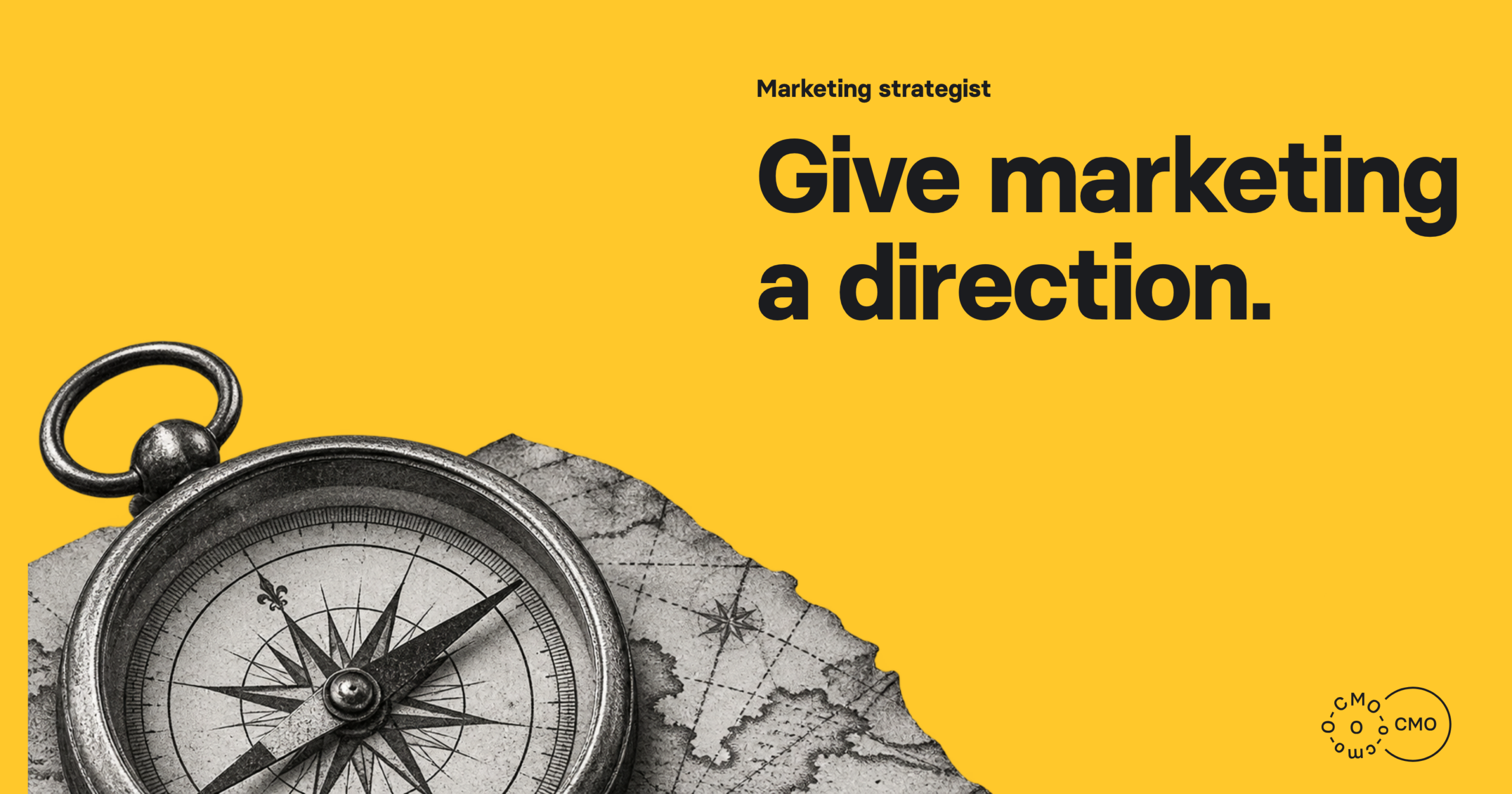
A marketing strategist is the compass that keeps your marketing pointed in the right direction.
They turn scattered activities into a system: one that connects creative work, data, and business outcomes under a single plan.
Their impact shows up in how clearly teams prioritize, how confidently they execute, and how consistently marketing contributes to growth.
👉 Need that compass? Let’s build your strategy together.
At O-CMO, we help companies build that structure — whether through a fractional CMO, a marketing director, or a strategist you can borrow until you’re ready for your own.
Every strong marketing function starts here: with clarity, direction, and a plan that actually works.
Find your marketing strategist
Frequently Asked Questions
What does a marketing strategist do?
A marketing strategist researches the market, defines positioning and audiences, prioritizes channels, plans campaigns, allocates budget, and builds the measurement framework that connects marketing activity to business goals.
What is the difference between a marketing strategist and a marketing manager?
A strategist decides where marketing should compete and what the plan should prioritize. A marketing manager usually coordinates the people, timelines, and execution needed to deliver that plan.
How much does a marketing strategist earn in 2026?
Indeed reports an average US base salary of $76,030 for digital marketing strategists and $85,209 for senior digital marketing strategists as of July 2026. Location and scope can change the figure significantly.
When should a startup hire a marketing strategist?
A startup should hire one when it has a validated product and active marketing activity but lacks positioning, channel priorities, campaign sequencing, or a clear link between spend and pipeline.